
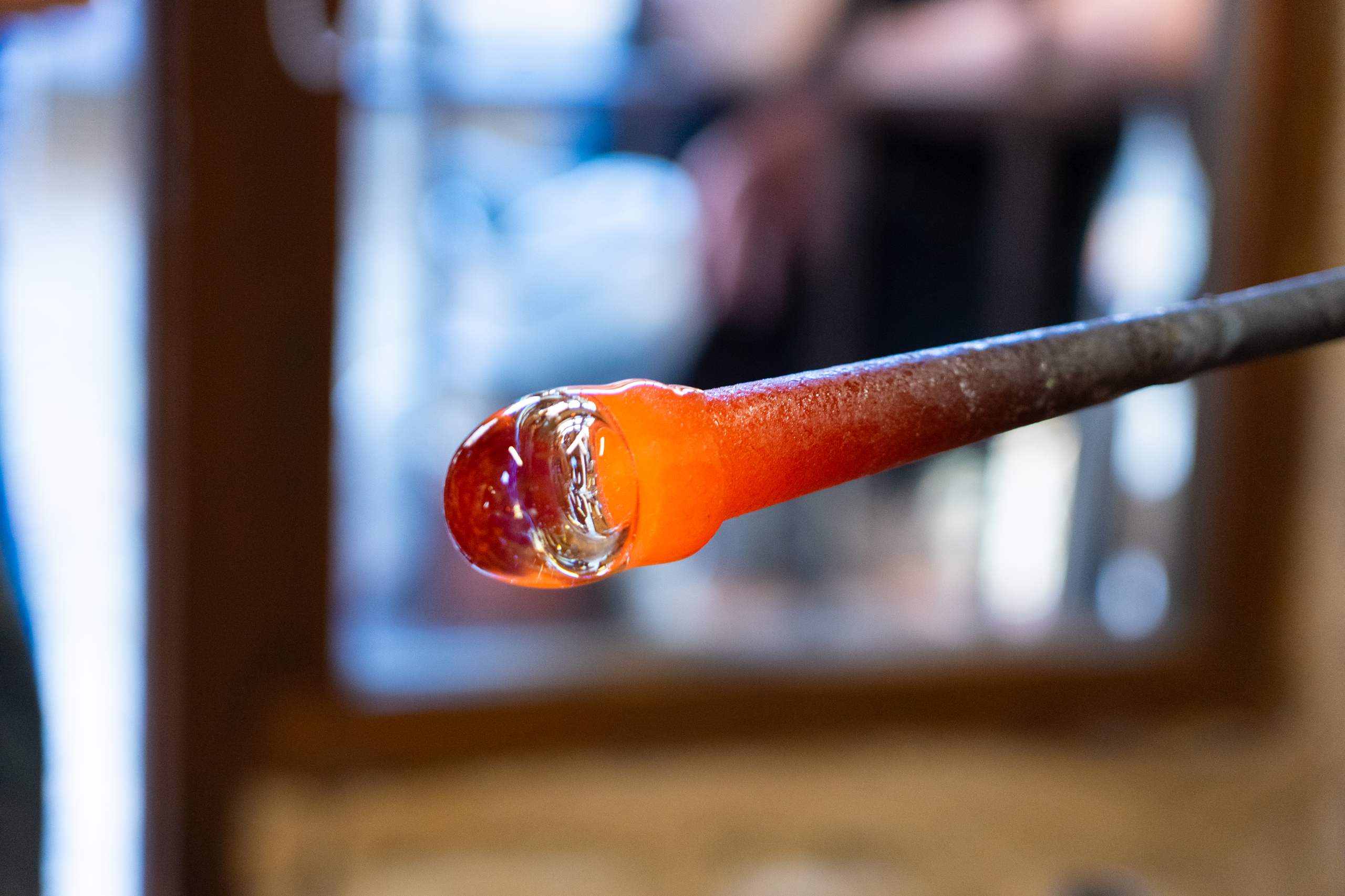
Unlike other materials like wood, metal, or clay, glass is extremely responsive to the light surrounding it. A piece may appear brilliant and vivid in the morning light, more muted at midday, or entirely different with the application of artificial light. This quality is one reason glass continues to hold the interest of artists today.
Light and Glass
When light interacts with glass, it can be reflected, transmitted, scattered or absorbed. How this occurs depends on the color, thickness, and type of the material in use. Transparent glass permits light to pass through it, whereas surfaces and textures will affect the shadow cast or the image projected through the glass.
When designing, artists consider the lighting environment for a work of glass art as an additional component and not just the setting in which the work will be presented.
Colors, Transparency, and Ambience
Each color behaves in its own way when it is interacting with light. A range of warm colors can create energy and motion; while a range of cooler colors might suggest calm and restful balance. In addition, transparency affects the perception of glass because light can be controlled as to how much of it will enter, or pass through, a design.
Through the combination of color and transparency, a glass artist can create effects that will change during the daylight hours.
Design for Space and Building Structures
Glass art is often placed in architectural settings as a building element and can be used in windows, dividers, light fixtures, or decorations.
For these reasons, light direction, the spatial proportions of the room, and other materials are considerations that need to be taken into account for any design process.
Glass Art Endures
While the methods in which glass artists use light in their artwork continue to expand with new technology, the light itself still remains the primary medium. Whether it be contemporary glass sculptures or traditional stained-glass windows, one can see light as color and atmosphere as the defining factor.
Conclusion
The uniqueness of glass art is that its appearance is always changing. With each moment of the day, a piece takes on different character and atmosphere. Light is the element that creates this and sets glass art apart from all other mediums. It is important to understand the relationship between glass and light if you wish to study glass art.